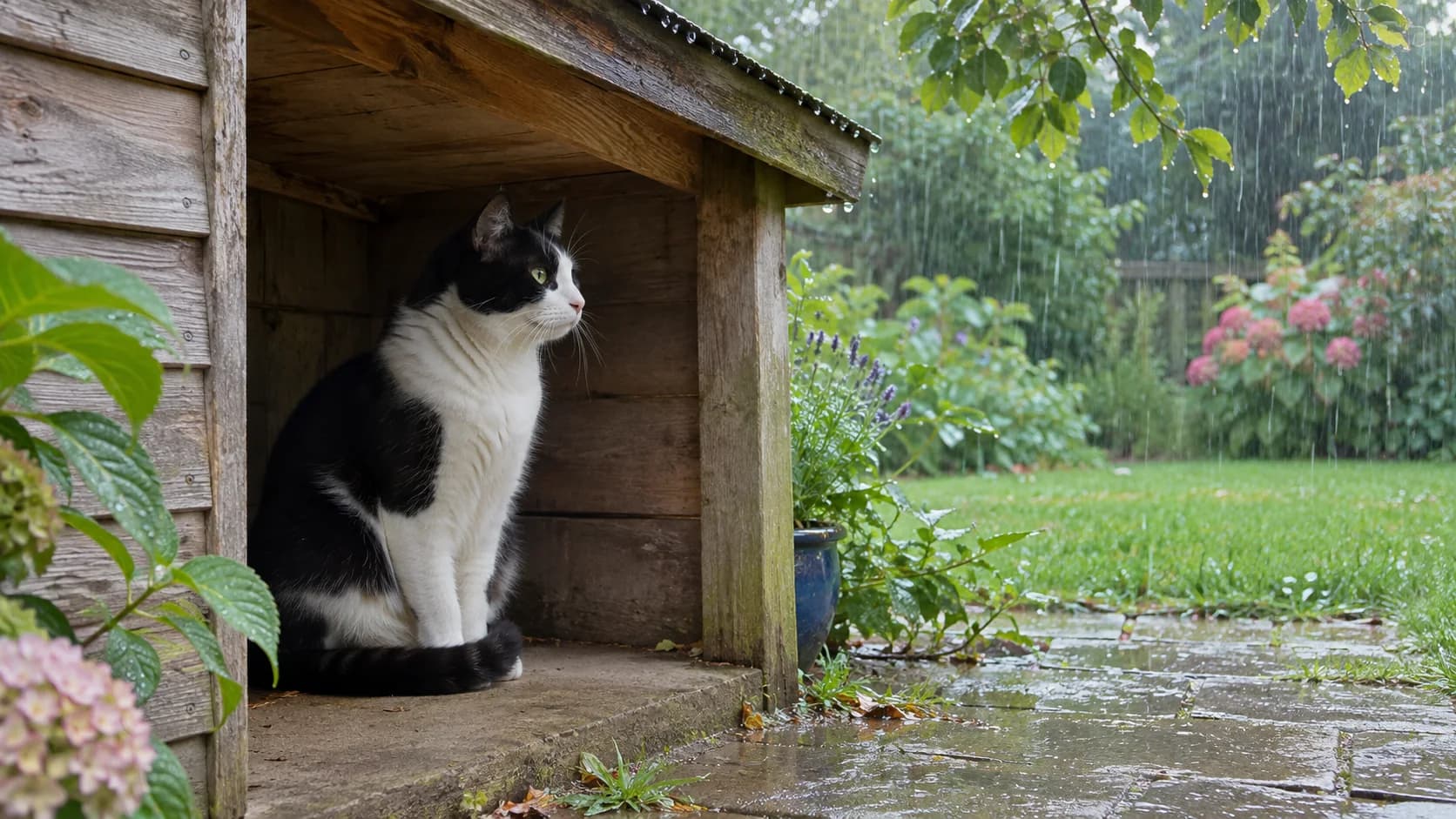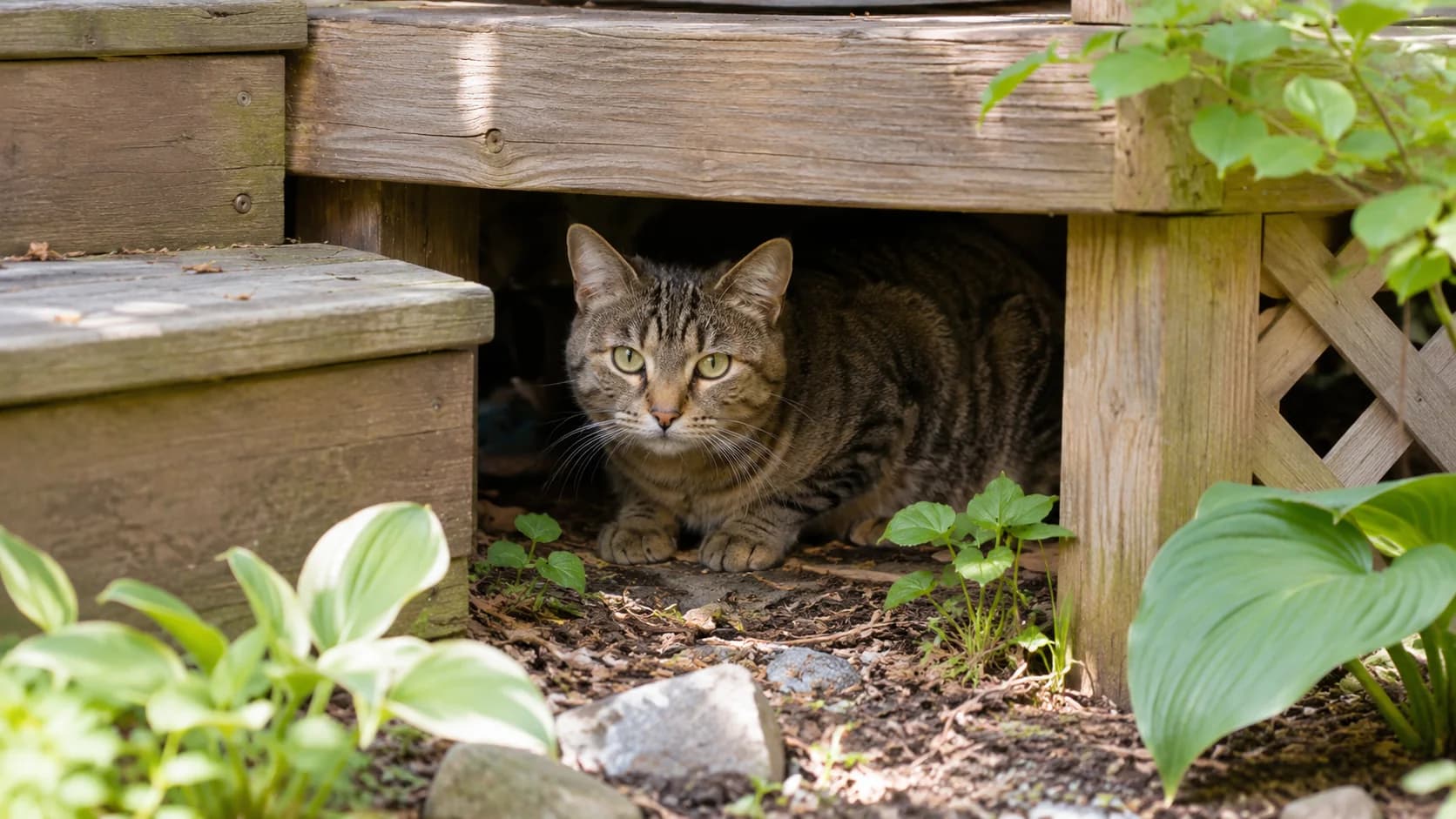
Your cat may come back, but nobody can promise that they will return on their own or by a particular time. Start searching and reporting now. A cat that is hiding, shut inside a building or lost in an unfamiliar place may need help even when they are close to home.
Waiting for a familiar sound at the door is hard. You do not have to choose between hoping your cat returns and looking for them. Keep a way to monitor home while you organise the search, and ask someone you trust to help with calls or nearby checks.
Can cats find their way home?
Some cats do return without being collected, but familiarity with an area is not a guarantee. The Missing Animal Response Network explains that cats displaced into unfamiliar territory may hide and be too frightened or disoriented to return. That can include an outdoor cat chased beyond their usual area, as well as an indoor cat that escapes.
Start with the circumstances you can establish:
| Situation | Where to focus first |
|---|---|
| An indoor cat was seen escaping | The exit and nearby hiding places; use the indoor escape checklist |
| An outdoor cat missed their usual return | Their last confirmed location, regular visiting places and enclosed spaces; use the outdoor-cat guide |
| Your cat disappeared after a move | Search the current address and alert a contact at the old one; use the moving-house plan |
| A carrier opened away from home | Coordinate searches at the escape location; use the carrier-escape guide |
| Nobody actually saw your cat leave | Check inside the home before treating an open door as proof of escape |
A familiar voice may be worth trying, but silence is not a location report. Do not cross a property off your list just because your cat did not answer.
What research says about missing cats coming back
A 2018 study of 1,210 missing cats estimated that 34% were found alive within seven days and 61% within a year, using the subset with sufficient outcome and timing data. Being found alive includes recovery through searching or other help; it does not mean all those cats walked home on their own.
The study used a retrospective online questionnaire. The authors noted possible recall errors and a sample that might not represent all cat owners. These figures cannot give your individual cat a personal probability of returning, and they do not create a deadline for stopping the search.
Our practical takeaway is to keep the search organised rather than waiting for a statistic to become a timetable. Record checks and sightings so tomorrow's effort builds on today's.
What to do instead of waiting for your cat to return
Begin with a short list that somebody can actually complete:
- Write down the last confirmed sighting. Include the date, time, exact place and who saw your cat.
- Assign nearby checks. Give each helper named properties or spaces, with permission arranged before entry.
- Ask for physical checks. A neighbour opening their shed and looking behind stored items is more useful than a quick glance across the garden.
- Keep one contact available. Decide who will answer calls while others search. Test that the number on the appeal works.
- Track unfinished jobs. Separate “not checked” from “checked but not found”. Set a follow-up for residents who are away.
Cats Protection recommends checking the home and garden, neighbours' properties and enclosed places, and contacting local services. Our complete lost-cat guide brings the physical search, microchip update and US/UK contact steps together.
You can create a free missing-cat report to give helpers a single photo and current contact details. Ask them to share the report link so updates do not get separated from the original appeal.
Help a returning cat without relying on a home remedy
Decide how you will notice a return: a person watching the likely entrance, or a camera positioned with permission and without filming neighbours' private spaces. Secure other pets and consider home security before arranging any supervised access. Leaving a door open unattended is not a complete recovery plan.
If you suspect your cat is visiting a spot but have not confirmed it, Humane World for Animals describes using a motion-activated camera to identify visits to food. Ask a local rescue about suitable placement and monitoring. An empty bowl alone cannot identify which animal ate there.
Advice about used litter outdoors differs between organisations. The Missing Animal Response Network explains why it does not recommend litter as a recovery method. Do not treat a scent item as a promise of return or let it replace checking places where your cat could be trapped.
If your cat appears but will not come to you
Pause and observe. Note the exact spot and avoid turning a sighting into a crowd around your cat. Give the details to a local rescue or experienced recovery helper if you cannot safely bring them in.
Useful information to send is:
Possible sighting at [place] on [date] at [time]. Photo/video: [available/not available]. Identifying features: [details]. Cat went towards [observed direction]. The person who saw them can be contacted at [private contact].
Keep that private record separate from a public update. If a humane trap is advised, agree who will monitor it and how weather, access and other animals will be handled before setting it.
What if my cat is still missing after days or weeks?
Review the work without assuming that a lack of news tells you the outcome. Ask which buildings remain inaccessible, whether local services have current details, and whether found-cat listings were checked using different descriptions or coat colours.
Use our week-later search review to divide the next jobs. Give one helper responsibility for incoming messages while you rest; an exhausted owner should not have to be the only person keeping the search going.
Common questions about cats returning home
Will my cat come back when they get hungry?
Hunger is not a dependable recovery plan. You cannot know whether your cat can leave a hiding place or reach home. Keep searching, and ask for local recovery advice if you have a confirmed location but cannot bring them in safely.
Does no sighting mean my cat has gone far away?
No. It means you do not yet have a verified location. Review the close search and investigate credible reports farther away. Our guide to where scared cats hide can help make nearby checks more thorough.
Can a cat come back after a long absence?
It is possible, but neither a reunion story nor the time missing can predict your cat's outcome. Keep contact details current, continue checking possible matches and adjust the search to new evidence.
What should I do when my cat comes home?
Keep them safely indoors, observe their condition and contact a vet if they appear unwell or injured. Update your report and everyone helping. If you are worried about lack of food, water or exposure, see our outside-survival and veterinary-help guide.