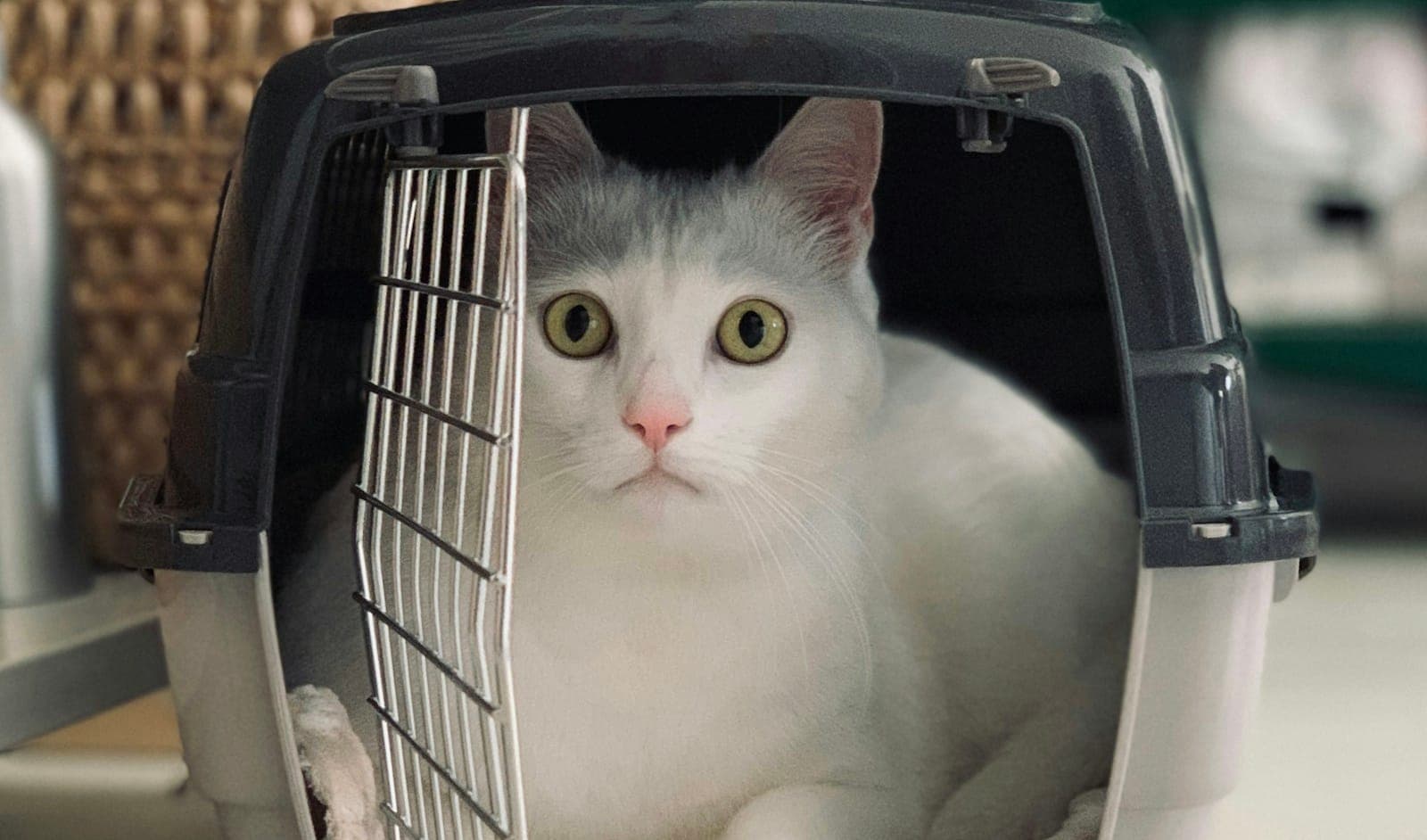
If your indoor cat has escaped, start at the door, window or other place they got out. Look carefully at nearby hiding places before moving the search further away. Silence is not proof your cat is absent: a frightened cat may stay hidden instead of answering you. This behaviour is described in Humane World for Animals' lost-cat guidance.
This guide focuses on the physical search after an indoor escape. For the full reporting and contact checklist, also use our main lost-cat guide.
Establish what you actually know
Ask anyone at home whether they saw the escape, which direction the cat went and at what time. If nobody saw them leave, check indoors too. Write a short record before you begin:
- Last seen indoors: [place and time].
- Possible exit: [door, window or other opening].
- Escape witnessed by: [name, or not witnessed].
- Direction of movement: [observed direction, or unknown].
- Other access points that need securing: [list].
Keep other pets safely indoors. If you plan to leave a supervised route back in, consider household security and other animals first. Do not leave your home open and unattended as a search tactic.
Make the first search small enough to be thorough
The Missing Animal Response Network describes displaced indoor cats seeking concealment. Nearby cover is a sensible starting point, not a guaranteed boundary. Avoid treating a claimed search radius as a rule that makes other evidence irrelevant.
Work through individual spaces around the exit. In your own property, or with the owner's permission, inspect:
- The underside and edges of steps, decks and porches.
- Dense shrubs and gaps behind planters or stored items.
- Garages, sheds and other enclosed spaces.
- Spaces beside fences, walls and neighbouring buildings.
- Around parked vehicles, without crawling into an unsafe area or moving a vehicle before it is checked.
Use a torch to see into dark gaps from a safe position. If you cannot see the whole space, record it as partly checked. A quick glance from a gate is not the same as opening the shed and looking inside.
Give each helper a specific task
You might ask one person to search the garden while another contacts immediate neighbours and a third files reports. Avoid sending every helper to walk the same street while nobody follows up on inaccessible spaces.
Use a simple search log:
| Place | Time | What was checked | Next action |
|---|---|---|---|
| Own garage | [time] | Door opened; storage area inspected | Recheck any inaccessible gap |
| Neighbour's shed | [time] | Owner not home | Ask owner to open it on return |
| Shared courtyard | [time] | Visible areas checked | Ask caretaker about locked storage |
These are examples of recording work, not suggested findings. Keep addresses and residents' details in the private log.
Ask neighbours for access and observations
Send a clear photo and a specific request. You can copy this wording:
Our indoor cat escaped near [location] at [time/date]. Please check your shed, garage and sheltered spaces if it is safe to do so. If you see a possible match, please tell us the exact place and time, and take a photo from a distance if possible. Please do not chase. Contact: [number]. Updates: [report link].
Ask about security-camera footage from the relevant time, if neighbours are willing to check it. A timestamp can establish a direction of travel. Do not turn a blurry animal in a clip into a confirmed sighting without checking the identifying details.
If you see your cat
Stop and observe instead of rushing towards them. Note where they are and whether there is an obvious danger nearby. Avoid gathering a crowd around a hiding place or sending someone into an unsafe gap to retrieve them.
If your cat will not approach, ask a local rescue or experienced cat recovery organisation for help. Share the photo, exact location and any repeated visiting times. This gives them something concrete to assess.
Camera monitoring and humane trapping can form part of a recovery plan, but setup matters. Get advice on the particular location, animal and weather, and on how any trap would be continuously monitored. A trap left unattended is not a substitute for a search plan.
If nothing has been seen yet
Review what has really been checked. Revisit spaces that were inaccessible or where somebody only glanced outside. Quiet periods can make it easier to listen and observe, but only search where you can do so safely.
Keep local vets, shelters or animal services informed through the contact steps in the main guide. Add a clear poster and check found-cat reports alongside the physical search.
Advice about leaving used litter outdoors conflicts between organisations. The Missing Animal Response Network explains why it does not recommend this method. Do not rely on a scent trail or promise that a cat will return by a particular hour. Base the next search on checked locations and credible sightings.
Common questions after an indoor escape
Should I wait until my cat gets hungry?
Keep searching and reporting. Waiting for a predicted return time leaves useful jobs undone. If you are considering a feeding or camera station, get local recovery advice about where it belongs and what other animals it might attract.
Does not answering mean my cat has gone far away?
No. A lack of response does not tell you their location. Continue the close search and investigate credible evidence from elsewhere instead of using silence as a distance estimate.
What if my cat usually goes outside?
Use the outdoor-cat guide. If that cat escaped in an unfamiliar place, tell any recovery helper that detail: normal outdoor experience and familiarity with the current area are different things.