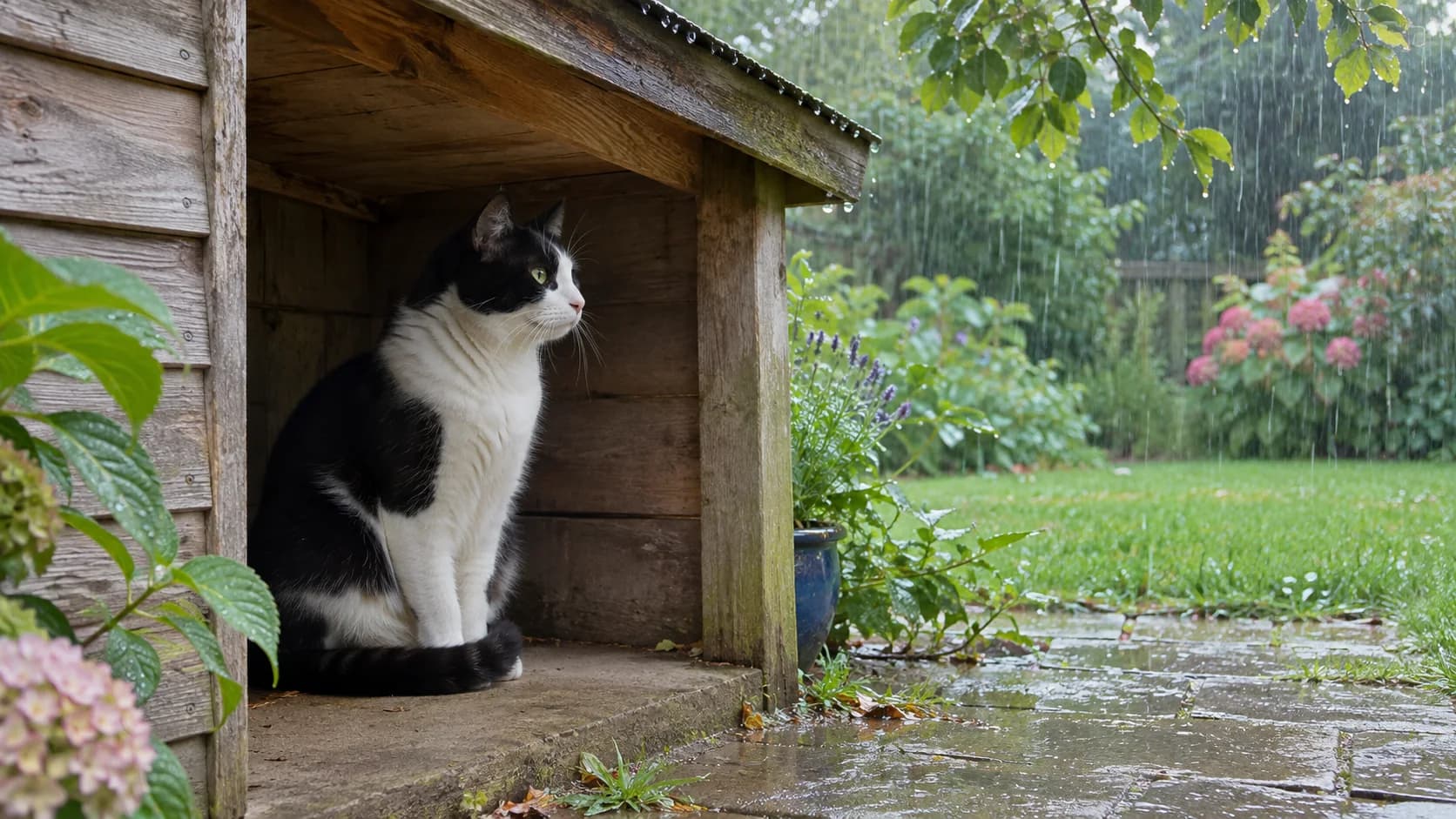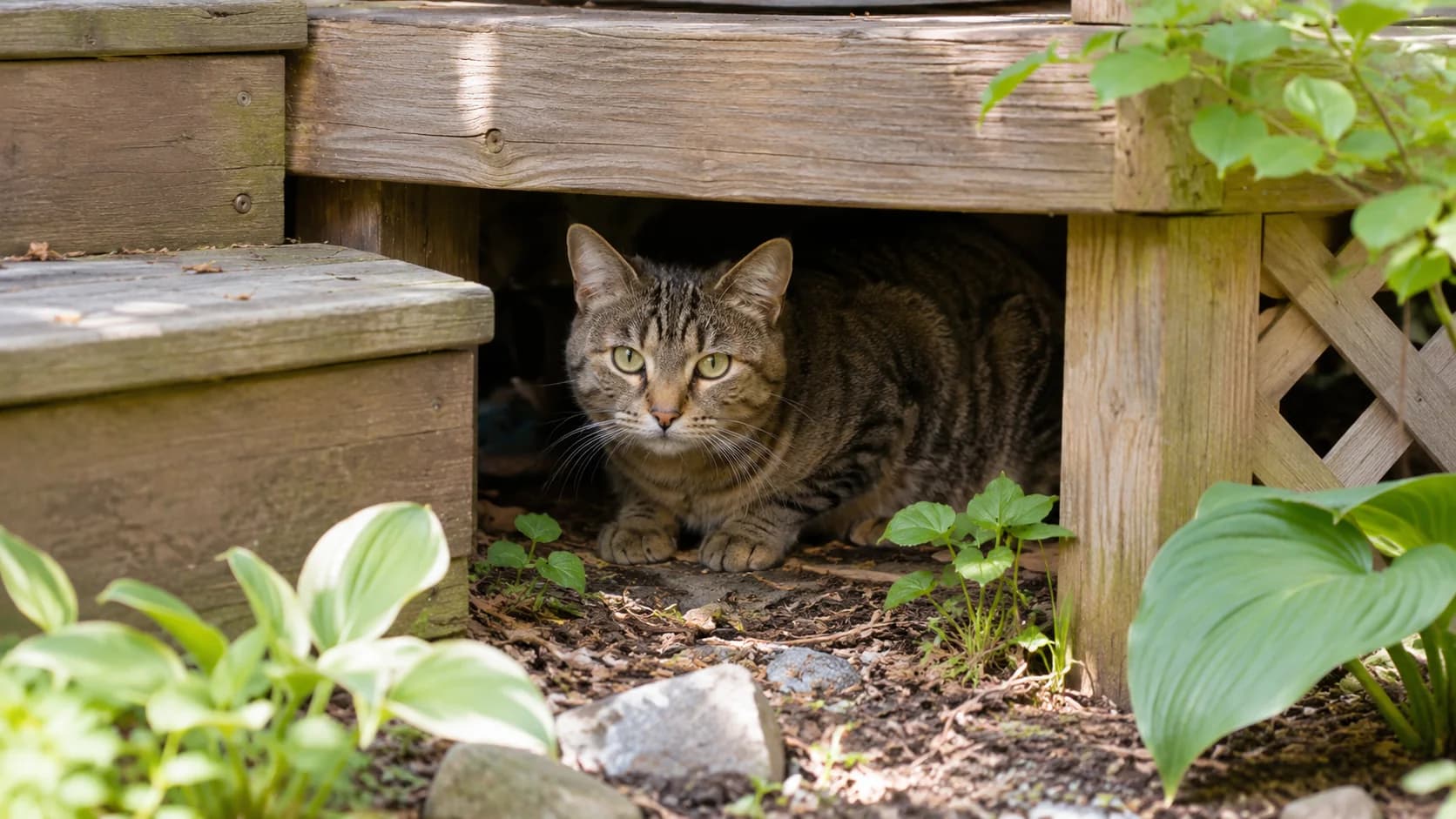
Scared cats often hide in quiet, sheltered spaces: beneath porches or decks, inside sheds and garages, behind dense plants, or in small indoor gaps. Search individual hiding places around the last confirmed location, even if your cat does not answer. Calling from the street cannot tell you whether a cat is tucked behind a box inside a garage.
First establish whether your cat is missing outdoors or simply unseen indoors. If nobody witnessed an escape, start inside. If you know they got out, ask one person to check the home while another begins around the exit.
Why a frightened cat may stay silent
Humane World for Animals warns that cats unused to being outside, or lost in an unfamiliar area, may be frightened and fail to respond to calls. Silence does not prove that they are absent or no longer recognise you.
Hiding also happens indoors. Cats Protection explains that it can be normal behaviour, a response to stress, or a sign of illness. If a cat you can locate is hiding unusually and seems unwell, speak to a vet rather than assuming fear is the only explanation.
For a missing cat, the useful question is: which spaces have actually been seen inside, and which have only been walked past?
Where to look for a cat hiding indoors
Keep outside doors and windows secure while you check. Tell everyone in the home that a search is in progress so nobody starts an appliance or moves furniture without looking first.
Cats Protection's lost-cat checklist includes cupboards, bedding, appliances and spaces opened during building work. Use this room-by-room worksheet to make those checks specific:
| Area | Places to inspect | Before moving anything |
|---|---|---|
| Bedroom | Under and behind beds, wardrobes, bedding and open drawers | Check folds and gaps gently before lifting bedding or closing drawers |
| Living room | Behind sofas, underneath furniture, curtains and boxes | Inspect reclining mechanisms before operating a chair or sofa |
| Kitchen and laundry | Cupboards, open appliance drums and gaps behind units | Do not run an appliance until it has been checked |
| Storage and spare rooms | Suitcases, packing boxes, shelves and spaces behind stacked items | Remove items carefully; do not shift an unstable stack |
| Areas with recent work | Accessible openings, cupboards left open and spaces near removed panels | Ask the responsible tradesperson to inspect inaccessible cavities safely |
Check a room methodically before marking it complete. If you cannot see beneath a fitted unit, write “gap not inspected” rather than “kitchen clear”. A torch and a small mirror may help you look from a safe position; do not dismantle electrical equipment or reach blindly into a dangerous space.
If you find your cat resting safely, reduce the disturbance. A healthy cat hiding after a noisy visitor needs a different response from a cat trapped inside an appliance or showing signs of illness.
Where scared cats hide outside
For an escape from home, start at the exit and work through nearby cover. For a cat lost elsewhere, use the last confirmed location there. Our indoor-cat escape guide covers the wider reporting and recovery plan.
Humane World specifically recommends checking decks, porches, garages and sheds. The worksheet below turns the search into named checks rather than a general walk:
| Place | What a thorough check means |
|---|---|
| Under steps, decks and porches | Look through accessible sides at ground level; record sections you cannot see |
| Sheds, garages and outbuildings | Ask the owner to open them and inspect behind stored objects |
| Shrubs and garden edges | Look beneath cover and behind planters without disturbing the whole area at once |
| Fences and neighbouring buildings | Check accessible sheltered gaps on both sides with permission |
| Parked vehicles | Ask the owner to check before starting or moving; keep out from beneath vehicles |
| Shared courtyards and storage rooms | Ask a caretaker or keyholder about locked areas and recent closures |
The list helps organise checks; it cannot establish where your cat is. Do not disregard a credible sighting elsewhere because the first hiding places are close to home.
If a space is too tight or hazardous to inspect, contact the owner, building manager or appropriate rescue service. A person becoming trapped or injured does not help the cat.
Search quietly and keep an access log
Choose a small set of properties for each helper. Take a clear photograph, a charged phone and a torch. Agree who will contact residents so they do not receive repeated requests from different people.
Record four things for every place:
- Location: a specific shed, porch or room, not just a street name.
- Access: who gave permission, or who still needs to be contacted.
- Check completed: what was opened and what was visible.
- Next action: a return visit, keyholder call or follow-up on a sighting.
Example entry: “Rear shed at number [X], owner away, interior not checked, [helper] to return at the agreed time.” Keep addresses and contact details private.
You can ask a neighbour:
Our cat is missing near [location]. Could you open and check your shed, garage and sheltered storage spaces? Please look behind stored items if it is safe. If you see a possible match, call [number] with the place and time. Please avoid chasing or trying to pull the cat out.
For a later search, use our night-search checklist to arrange permission and equipment before it gets dark.
What to do when you find the hiding place
Stop moving towards the cat and assess the setting. Are they safely sheltered, physically trapped, injured or beside a hazard? Keep people and other pets from crowding the opening.
For a cat safely hiding inside the home, Cats Protection advises giving them space rather than forcing them out. An outdoor recovery may need a different plan. If your cat will not approach, contact a local rescue or experienced cat recovery organisation with the exact location and a photograph taken without disturbing them.
Ask about observation or a monitored humane trap if appropriate. Agree access, supervision and a response plan with the helper first. Do not reach into a blind gap, chase a cat between gardens or leave a trap unattended.
If the cat is injured, trapped in an unsafe structure or struggling to breathe, seek urgent professional help and describe the access problem as well as the animal's condition. Cats Protection's first-aid guidance lists breathing difficulty, weakness and pain among reasons to call a vet immediately.
Common questions about hiding cats
How long will a scared cat stay hidden?
There is no dependable countdown. Do not wait for a fixed number of hours before searching or seeking help for an unwell cat. For a missing cat, track physical checks and sightings; for one safely located indoors, monitor their behaviour and welfare.
Will a scared cat meow when I call?
They might, but you cannot rely on it. Allow quiet pauses to listen, and still inspect accessible hiding places. No answer is not a completed search.
We already checked the garden. Should we look again?
Review what “checked” meant. A locked shed, the far side of a deck or an obstructed gap may still need attention. Note when each inspection happened so you can distinguish an incomplete check from a genuinely new sighting.
What if I cannot find any hiding place?
Continue the broader lost-cat search and reporting plan. Keep one free missing-pet report updated with a recognisable photo and monitored contact number, and follow credible sightings alongside nearby checks.