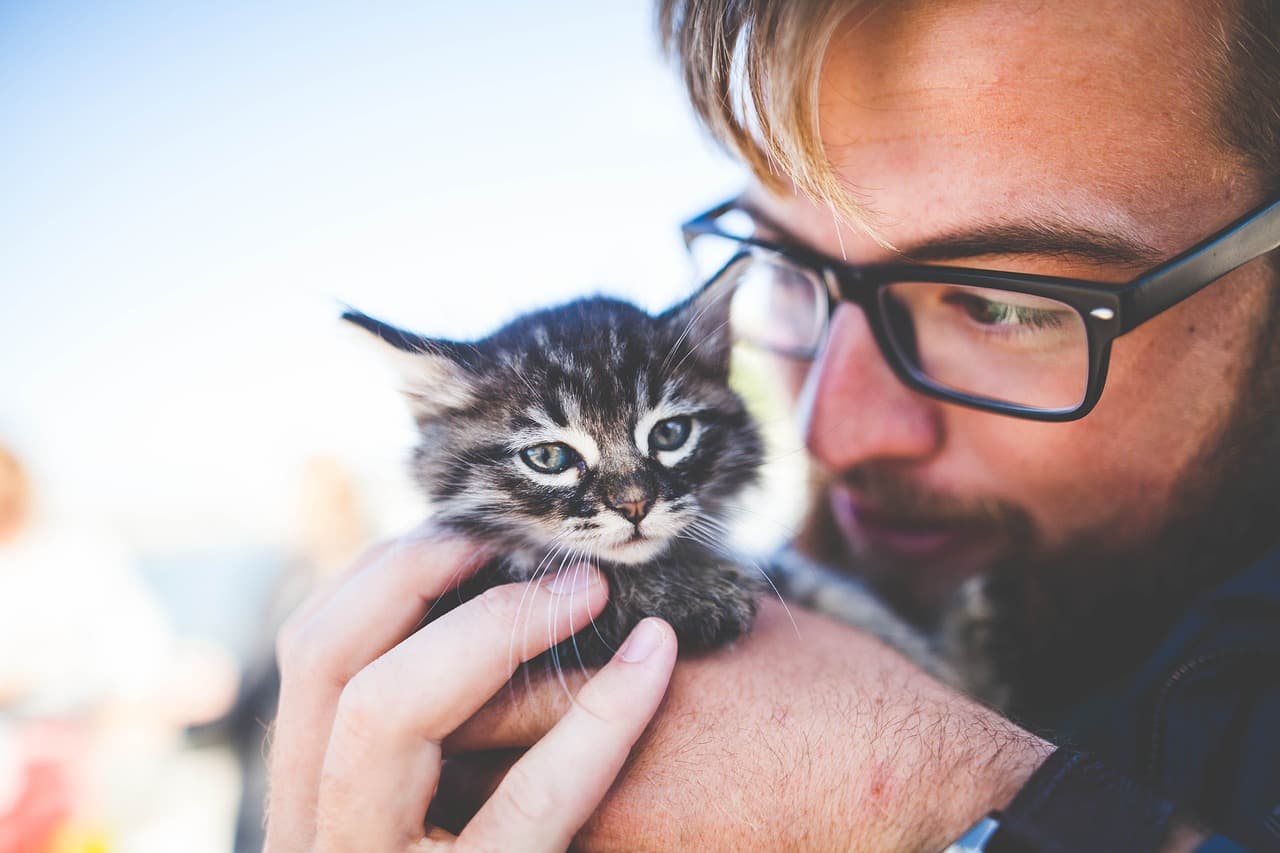
If you find an unfamiliar cat, observe before assuming they are lost. A cat outdoors may belong nearby or be a community cat. If they appear injured, ill or in immediate danger, contact a local vet or animal service promptly for guidance. Avoid chasing or trying to pick up a frightened animal.
Your first job is to establish what help is needed and preserve enough information to find an owner. This guide is for a finder; if your own cat is missing, start with how to find a lost cat.
Record the place, time and what you can see
Take a photo from a safe distance if possible. Note the location, date and time, coat markings and any collar. Write down observed behaviour rather than a diagnosis: for example, "limping on a front leg" is more useful to a vet than deciding what the injury must be.
Check with nearby residents whether they recognise the cat. Do not take an apparently healthy cat far from the area simply because they are friendly or have no collar. Best Friends Animal Society explains that many cats outdoors are not lost.
If you are concerned but cannot safely approach, tell the local service that too. Give the last observed position and whether you can remain nearby safely.
Ask for a microchip scan
Call a nearby veterinary practice, shelter or rescue to arrange a scan and ask how to bring the cat in safely. Do not assume every location can receive an animal immediately. If you cannot transport the cat, ask whether a local organisation can help.
Cats Protection recommends microchip scanning as an early step for a cat you think may be lost. Let the scanning organisation handle registry enquiries. A chip contains an identification number used to look up a registry record; it is not a GPS tracker. The AAHA microchip FAQ explains that distinction.
No chip being found does not prove that the cat has no owner. Continue local enquiries and the reporting process recommended for your area.
Who to contact in the United States
Ask city or county animal services, or the shelter serving the found location, how to file a found-cat report. Ask whether they offer scanning, what to do if you cannot transport the cat, and whether a community-cat programme should assess the situation.
Useful questions for the call are:
- "I saw this cat at [place/time]. Is this the area your service covers?"
- "Where can a microchip scan be arranged?"
- "Should I leave the cat in place, or is help needed to move them safely?"
- "How do I file a found report and check missing-cat records?"
- "What is the next step if nobody comes forward?"
Record the advice and reference number. Intake arrangements and ownership procedures vary, so use the instructions of the relevant local service rather than a nationwide waiting-period claim.
Who to contact in the United Kingdom
Contact a local vet, your local Cats Protection branch or another cat rescue for identification and welfare advice. Explain whether the cat is injured, whether they can be safely contained and whether neighbours know them.
The council route for stray dogs should not be assumed to cover cats. If the first organisation cannot help, ask for the appropriate local contact rather than transporting the cat from place to place without an arrangement.
Share a found-cat notice
Search missing-pet reports and local lost-pet groups. If an owner has not been located, create a found report, choosing the found status. Use the place where the cat was found rather than an unrelated address.
You can adapt this message:
CAT FOUND / SEEN — [area]
A [colour and short description] cat was [seen/found] near [landmark] on [date] at [time]. [Still in the area / now with the named local service, if appropriate.] If you think this may be your cat, please contact [method] with identifying details or earlier photos. Latest update: [link].
Choose "seen" if you have not secured the cat. Avoid publishing where an animal is being kept in a private home. If a service has taken responsibility, use its approved contact details and reference.
Be careful with kittens and community cats
Kittens on their own are not automatically abandoned; a mother may be nearby. Contact a local rescue, shelter or vet for an assessment, especially if there is immediate danger or visible illness. Do not apply a generic adult-cat plan to a litter of kittens.
An ear tip may indicate a cat has been through a community-cat neutering programme. Best Friends' found-cat guidance covers ear-tipped cats and kittens. Share what you observe with the local service instead of deciding ownership or welfare from one feature alone.
Verify a possible owner before a handover
Ask the person for earlier photographs and distinguishing details, and have the scanning vet or relevant service help with registry information. A confident message saying "that's mine" is not enough on its own. If the information conflicts, ask that service to handle the claim.
Keep ownership documents private. Arrange any approved handover safely, and let a friend know where you are going. Do not give the cat to a third party who cannot establish their connection to the owner.
If no owner is found
Follow up with the organisation advising you. Ask about local reporting and ownership requirements before keeping or rehoming the cat. A short period with no reply to an online post does not establish abandonment.
If temporary care has been agreed, ask a vet or rescue about feeding, secure accommodation and separation from your own animals. Cats Protection cautions against routinely feeding an unfamiliar, apparently healthy cat, including because an owned cat may need a particular diet. Get individual advice for an underweight or unwell animal.
Once the case is resolved, update the report and tell the organisations and group administrators you contacted. That prevents an old notice continuing to draw worried owners after the cat is home.